Monday, May 9, 2016

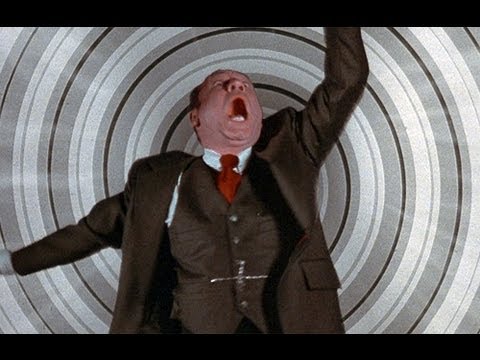
High Anxiety (1977) * * * 1/2


Directed by:  Mel Brooks

Starring:  Mel Brooks, Madeline Kahn, Cloris Leachman, Harvey Korman, Barry Levinson, Rudy DeLuca, Ron Carey, Dick Van Patten, Howard Morris

The biggest laughs from High Anxiety come from its sheer goofiness and good cheer.     It is surely a parody of Hitchcock films, including a plot which Hitchcock himself mastered.      But there is inspired humor elsewhere too, coming from the various oddballs that populate the film.     Most of the jokes hit, a few miss, and the one sequence in which Brooks and Kahn play a loud, elderly Jewish couple attempting to pass a security checkpoint could have been left on the editing room floor.    It's not Young Frankenstein, but it's pretty good Brooks.

The one overriding observation I can make from a Mel Brooks movie is its cheerful spirit.       Everyone seems to be having a pretty good time.    Even the jokes that bomb come from inspiration.     You can't say they didn't try and you can't say Brooks doesn't have the best time trying.    It is infectious.     How else can movies like Young Frankenstein, Blazing Saddles, and this one work without complete faith in their own lunacy?    

In High Anxiety, Brooks plays Dr. Richard Thorndike, who assumes the new role of director of the Institute for the Very, Very Nervous.     Almost immediately, he deduces that all is not right with the place.    A patient seemingly flashes Morse code at his window and another behaves like a dog right down to lifting his leg to urinate on people.     His underlings Nurse Diesel (Leachman) and Dr. Charles Montague (Korman) are hardly trustworthy.     They knowingly keep sane people committed to boost the revenue and soon Thorndike will have to be out of the way in order for their cash cow to keep producing.    

Diesel and Montague engage in BDSM in which Montague screams so loud he forces Diesel to tell others she has the TV on too loud.     Both Leachman and Korman play variations of previous roles in Brooks' films, but they are still hilarious villains.     Brooks is more or less the straight man who finds himself as the Innocent Man Wrongly Accused (a Hitchcock favorite plot) when a lookalike shoots someone in broad daylight and forces Thorndike to go on the run.     He is soon accompanied by a patient's daughter (Kahn) who is convinced her father is sane and kept imprisoned at the institute.

The plot is only the clothesline on which Brooks hangs the verbal and sight gags.     Some are direct parodies of Hitchcock classics, such as a bellboy (Levinson) stabbing Thorndike in the shower with the newspaper Thorndike incessantly requested.    It's Psycho, to be sure, but there is a funny payoff.     I also like The Birds parody scene in which the birds don't swoop don't and peck out Thorndike's eyes, but crap all over him.    Thorndike also suffers from "high anxiety" which is an excuse to parody Vertigo.     There is also a funny scene where Thorndike is being attacked in a phone booth and his attempted strangulation is mistaken by Kahn as kinky phone sex.  

Aside from To Be or Not To Be (1983), High Anxiety is the last truly consistently funny comedy from Brooks.    History of the World Part I (1981) and Spaceballs (1987) had their moments, but never reached the levels of inspiration of Brooks' earlier work.     He approaches Hitchcock with true admiration and doesn't take cheap shots.     The tone is set early on, following the opening credits, where so much activity occurs in an airport terminal that Brooks observes, "What a dramatic airport." 

Captain America: Civil War (2016) * * *

Captain America: Civil War Movie Review

Directed by:  Anthony Russo and Joe Russo

Starring:  Chris Evans, Robert Downey, Jr, Scarlett Johannson, William Hurt, Chadwick Boseman, Sebastian Stan, Elizabeth Olsen, Paul Rudd, Paul Bettany, Daniel Bruhl, Tom Holland, Jeremy Renner, Anthony Mackie, Don Cheadle

Captain America: Civil War is a de facto Avengers movie minus Thor and Hulk.    I didn't miss them.    Avengers: Age of Ultron was a mess.    I can honestly do without any more movies with "Avengers" in the title because they exist in their own universe where everything of substance from the "solo" efforts is forgotten.     Captain America: Civil War puts the Marvel universe back on track.    It is a logical extension of the inner conflict Cap faced in the previous Captain America: The Winter Soldier.     Unlike the previous Avengers movie, it is not a free-for-all of mayhem.     There is an actual story here.   

If you recall, Captain America: The Winter Soldier introduced The Winter Soldier, a deadly, brainwashed assassin who was in fact Cap's childhood friend Bucky Barnes (Stan).     This started a moral battle on top of the physical one for both men.     Would Cap be able to reach through the brainwashing to find his old friend on the other side?     This continues in this installment, but once a terrorist explosion occurs and Winter Soldier is presumed to be the suspect, the rest of the Avengers are drawn in as well.     The Avengers were not solid even before this, due to recent United Nations accords forcing oversight on the group.     This is not surprising, considering how much property damage and lost lives occurred in their recent outings.     Cap believes The Avengers should choose their battles, while Tony Stark/Iron Man (Downey) agrees with the accords.     The other members choose their sides.    

Captain America: Civil War reintroduces us to Spider-Man (Holland), a nerdy kid with the spider powers and introduces a new Avenger Black Panther (Boseman), who seeks revenge after his father is killed in the explosion.      Both Holland and Boseman are engaging and are welcome additions to an already-crowded Marvel universe.     Fortunately, the movie wisely decides not to introduce giant super monsters, unlike Batman v. Superman.     It does not hedge its bets.    There is a villain (Bruhl), whose motives and plan are intensely personal and maybe even understandable.     I enjoy movies where things are not black and white.     Captain America: Civil War, besides the obligatory fighting which people paid their money to see, raises questions and does not give us easy answers or payoffs.   

Is The Winter Soldier truly responsible for his previous actions, which we learn directly affected Stark, if he was brainwashed?     Is Captain America right or wrong to stand by his friend at the expense of his other friends?     Are the Avengers self-appointed vigilantes and is that a bad thing?    Instead of dulling my mind and senses with simply loud, choppily edited action, Captain America: Civil War doesn't duck these questions or hastily sidestep them.     If I've seen one building exploding, I've seen a thousand.     Fistfights don't thrill anymore.    Neither do explosions, cars flipping over, and punches that sound like the sound mixers are pounding the hell out of a sofa.    Civil War contains just enough of these sequences without losing sight of the story.    

Nonetheless, the showdown between all of the Avengers is quite fun.     They're trying to establish their respective agendas and reach their objectives.     Do they want to hurt each other?  No.   But, they also want to win.     So what to do?     Like everything else about Civil War, the answers are not tidy or easy.    Thank goodness directors Joe and Anthony Russo did not forget what made their previous Captain America outing special and unique.     They built upon it instead of giving us a movie where things are blown up and bodies fly around at a dizzying pace.  


Friday, May 6, 2016

The Curse of the Jade Scorpion (2001) * * *

The Curse of the Jade Scorpion Movie Poster

Directed by:  Woody Allen

Starring:  Woody Allen, Helen Hunt, Dan Aykroyd, Wallace Shawn, Charlize Theron, David Ogden Stiers

The Curse of the Jade Scorpion is a crime caper/romantic comedy which incorporates 1930's office politics, a hypnotist who uses his subjects to rob jewels while under a trance, and two people who loathe each other but soon find they love each other.   This is not Woody Allen on par with Annie Hall, Hannah and Her Sisters, or Crimes and Misdemeanors, but it is well done and enjoyable.   He doesn't have to hit a home run every time up to bat.   Sometimes, a double will do just fine.

Allen, who was in his mid-60's at the time Curse was made, was writing and directing films with leading ladies at least 30 years his junior.   I suppose if you're going to make romantic comedies and cast yourself as the lead, you may as well have Helen Hunt or Charlize Theron throwing themselves at you.   In Curse, Helen Hunt plays Allen's would-be love interest who doesn't fall easily into his arms.   She fights it every step of the way.   She is no pushover. 

Hunt plays Betty Ann Fitzgerald, an efficiency expert brought in to streamline an insurance office in 1930s Manhattan.    She immediately clashes with C.W. Briggs (Allen), an insurance investigator resistant to adapting to technology in solving cases.    He prefers old-fashioned hunches and using street informers.    Their mutual dislike becomes personal quickly.   They hurl insults and general meanness in each other's direction.   Betty Ann is also the mistress of Chris Magruder (Aykroyd), who runs the office and is forever promising to leave his wife.

The hypnotist Polgar (Stiers) enters the scene during a nightclub routine in which he places Betty Ann and C.W. under trances using separate trigger words.     They declare their love for each other to the amusement of the audience, but soon the hypnosis is lifted...but not really.    The sinister Polgar has a different agenda.    Soon after, he only needs to phone either Betty Ann or C.W., say the respective trigger word, and command them to steal precious jewels to deliver to him.    It is quite an ingenious scheme with virtually no chance of detection.

The jewelry heists make headlines and C.W. is soon a suspect on the run without any idea why because he has no memory of the robberies.   Betty Ann still can't stand C.W., but she believes in his innocence even though everyone else doesn't.   There are times in which C.W. or Betty Ann are in the trance in the other's presence and they once again declare love for the other, but only under the spell.  Once they are not under the spell, it's business as usual:  insults and mutual loathing.

We know sooner or later Betty Ann and C.W. will fall into each other's arms.   The hypnosis provides a segue to convince us that love is still possible between two people who can't stand each other on the surface.   Unlike other Allen comedies, there aren't really any memorable lines or quotes that leap to mind when thinking of The Curse of the Jade Scorpion.   The film has a distinct look and feel for its time and place which works.     Allen and Hunt are charming, even when they insult each other.     The movie makes good use of jazz music of the period, especially during the heist scenes.     It is not a deep film and no one looks for the meaning of it all.     We accept the premise and enjoy the ride.     Allen is better at making such a film than most other directors.  

Thursday, May 5, 2016

The Walk (2015) * * *

The Walk Movie Review

Directed by:  Robert Zemeckis

Starring: Joseph Gordon-Levitt, Ben Kingsley, Charlotte Le Bon, Ben Schwartz, Steve Valentine

Robert Zemeckis' The Walk is based on a true story of a daredevil who actually walked a tightrope between the World Trade Center towers on August 6, 1974.    Yes.    He, with the help of his accomplices, stretched a tightrope from one tower to the other and walked over the gap in between them.    That's one quarter-mile up in the sky.     He wasn't paid for the stunt and received some fleeting publicity, but other than this film and the 2009 documentary Man on Wire, Philippe Petit did not receive much recognition for his accomplishment.

The movie overcomes early storytelling lapses to bring us to an awe-inspiring final thirty minutes which makes the endeavor worthwhile.   The visuals are extraordinary.   We know the height effect is CGI, yet I still found my knees weakening a few times.   Zemeckis' effects do nothing less than put us right there between the towers with Petit.    He succeeds in not just showing us the event, but allowing us to feel it and live it.    Oddly, this is a true story which actually underplays the stunt instead of exaggerating it.     In the film, Petit walks the length five times before he is arrested by New York City's finest.     In real life, it was eight times.     Zemeckis probably assumed we couldn't take anymore heart dropping scenes and took it easy on us.

Joseph Gordon-Levitt plays Petit with a convincing enough French accent, which is to say he sounded better than Jacques Clouseau.    He tells his story from atop the Statue of Liberty, as if we needed more proof that he was not afraid of high places.      We see the World Trade Center Towers in the distance, knowing full well what they're eventual fate would become.     The Walk not only documents Petit's stunt, but also serves as a love letter to the now fallen Towers.     As Petit makes his walk, we can not help but realize that in a mere 27 years, the buildings would be reduced to rubble.    They were expected to stand for all time.   

Petit begins his story in Paris, where he acts as a street performer and while visiting a dentist, he sees a magazine photo of the Towers (still under construction) and believes he found his calling.     He enlists the help of circus tightrope expert Papa Rudy (Kingsley) to learn how to walk the tightrope and begins his journey by walking between the Notre Dame towers.     He succeeds and is now ready to take on the World Trade Center.      His research is extensive, visiting the Towers and using insiders and forged IDs to make his way to the roof.     His accomplices risked injury and being arrested to help Petit fulfill his "coup", as he called it.     They may have questioned his sanity while not questioning his passion.

The Paris stuff seemed mostly like marking time until we reach the main event.   It is the least interesting part of The Walk, but once the plan is set into motion and Petit and his crew work to avoid detection while planning the coup, The Walk is much more suspenseful.   Then, of course, we have the walk itself, which takes on a life of its own, but wasn't long enough to stretch the film to feature length.  

The visual effects are so real and stunning that they overshadow everything else.    It's good enough for us.    The event itself makes us forget the weaker scenes that went before.     Gordon-Levitt displays just the right, equal amounts of arrogance, vanity, and hubris for us to understand his vision.     He is not insufferable.     That is the last thing a story like this needs.     Zemeckis has spent a career specializing in visual effects extravaganzas with a heart and a central tug that keeps us engaged.    Even Flight (2012), which was mostly a human drama centering around an alcoholic pilot, contained a spectacular crash sequence.    Come to think of it, so did Cast Away.     

Tuesday, May 3, 2016

Misconduct (2016) *

Misconduct Movie Review

Directed by: Shintaro Shimosawa

Starring:  Josh Duhamel, Alive Eve, Al Pacino, Anthony Hopkins, Malin Akerman, Byung-Hun Lee, Julia Stiles

I have never seen a collective film cast perform as if the actors were forced to appear to pay off a gambling debt.      That is the feeling you get from watching Misconduct, a thriller that is a misstep from the opening moments and never lets up.     We don't care about any of the characters or what happens to them.     There are entanglements and plot twists to be sure, but the only thing they accomplish is adding to the film's running time.     There are acting legends who appear it (Pacino and Hopkins) and actors who have been better in other films.      Misconduct has straight-to-DVD written all over it.    

The film begins with a bad day in the life of Arthur Denning (Hopkins), a pharmaceutical company CEO in the middle of a potentially damaging lawsuit.     He has a fight with his younger blonde girlfriend Emily (Akerman) and hours later receives texts saying she was kidnapped and beaten.     The kidnappers demand a $2.5 million ransom.     Judging by Denning's behavior towards her, it's not likely he would pay $25.00 to get her back, let alone $2.5 million.     In fact, I picture him channeling Danny DeVito in Ruthless People and telling the kidnappers, "I dare you to kill her."

Denning agrees to pay the ransom, most likely because of ominous texts stating, "I know what you did."    Whatever it was, it's worth $2.5 million to him which he brings along in small bills to an art gallery.     Instead of paying the ransom, he punches out a guy who appears to be the kidnapper, but we know certainly can't be, because we have all seen movies before.     That is the last we see of Hopkins for a while, as the film flashes back to "One Week Earlier" and we witness what led us up to Hopkins' knockout punch.

One week prior, Ben Cahill (Duhamel), a hotshot, rising attorney with a troubled home life, is contacted by Emily (his former flame) who wants to seduce Ben and provide him with damning evidence against Denning proving he forged clinical trial results to push through FDA approval on a new drug.    She doesn't quite seduce Ben, although they do kiss and engage in some near rumpy-pumpy.     Ben uses the evidence to pursue the lawsuit with the cautionary blessing of his boss Abrams (Pacino).     Pacino puts on a Southern accent (the movie takes place in New Orleans), while no one else even bothers, and clearly is more involved than he seems.     There is talk of Abrams previously going after Denning, but coming up empty each time.    Maybe this will be the case where Abrams finally gets Denning.     Who even knows or cares?

A shadowy guy is snooping around also, known only as The Accountant (Lee), whose name I had to look up on the imdb.com credits for this film.     I wouldn't have known any other way.     He is dying from one of those lung diseases where he coughs up blood on cue.     Who hired him?   What is his mission?    Even after a climactic fight between he and Ben, we still don't know.     He kidnaps Ben's wife Charlotte (Eve), a nurse still feeling the pain of losing a child months earlier.     Eve is normally a fun actress to watch (and not just because she's hot), but in Misconduct she has the emotional range of a T-1000 Terminator.     Side note:   Lee played a T-1000 in Terminator: Genisys, so maybe he gave Eve pointers.

All of the chases, fights, and shootings are at the service of such a nothing story.     Charlotte plays a bigger part in the events to follow than at first seems, but after she explains her role in things to her husband, he simply blows it off and goes about his business.    Is the screenwriter trying to be ironic and cool about the whole thing?    Or surprise us with an unusual reaction to her story?    Or is it because Duhamel managed to go through the entire movie without betraying any emotions, so the filmmakers figured why start now?     He isn't the only one.    The entire cast invests as little feeling into this movie as possible.     We are almost tempted to take their pulses.  


Monday, May 2, 2016

We Are Marshall (2006) * 1/2


Directed by: McG

Starring:  Matthew McConaughey, Matthew Fox, January Jones, David Strathairn, Ian McShane, Kate Mara, Anthony Mackie

We Are Marshall is a football movie that would have been better off without any football in it.  It is based on the true story of the Marshall Thundering Herd (in Huntington, WV) football team that was killed in a horrific plane crash on November 14, 1970.   There were no survivors.   The only members of the team left were three varsity players that were unable to make the trip and assistant coach Red Dawson (Fox), who gave up his seat on the plane so he could recruit after the team's loss before the fateful flight.     The town was emotionally devastated and the thought of fielding a football team the following year was considered disrespectful to the players and coaches that died. 

A movie dealing with the town's collective grief and heartbreak would have been a more powerful film.   But We Are Marshall is so determined to play football the movie blows by the scenes dealing with the conflicting emotions caused by the crash.   For example, Red's wife (Jones) believes her husband was on the plane.  She is naturally grief-stricken.    In the middle of pouring rain (the movie has a few scenes with such rain), Red races up the driveway to his house to find his wife sobbing at the front door.   They rush to embrace and then the scene quickly fades out.   I would have liked to hear a conversation between the two about this fortunate twist of fate.   Any grieving person fantasizes that their loved one would resurrect or materialize out of thin air.   This happened to Mrs. Dawson and the movie doesn't pause to deal with this.  It is one of many wasted opportunities in the film.

Months pass and the university decides to field a team for the following year.   University President Donald Dedmon (Strathairn) is tasked with finding a new coach.   None of the alumni on the short list is interested, so he hires outsider Jack Lengyel (McConaughey).    McConaughey plays Lengyel as such a strange goofball that no player or university official would take him seriously.   It is a wonder he is even employed, let alone employed as a head football coach.   We can not take him seriously for a second.   However, Lengyel is able to convince Dedmon to petition the NCAA to allow Marshall to play freshmen, which was not permitted at the time.   How?   By turning off his inner weirdo just long enough to offer sage advice just when it is needed the most.    This happens on at least two or three occasions and rings false every time.    

We Are Marshall is so obviously a starring vehicle for McConaughey that it sacrifices all credibility.  What a miscalculation. McConaughey should have been asked to dial down the goofiness and give us a coach we can believe actually knows something about football.   The real Jack Lengyel was dismayed by McConaughey's performance and for good reason.   Lengyel went on to various coaching and athletic director positions after his tenure with Marshall.    I highly doubt he was as bizarre as McConaughey portrayed him.   Now I know how the real Patch Adams felt after watching Robin Williams portray him as basically a clown.

Marshall does indeed assemble a team of mostly freshmen (the NCAA relented after Deadmon apparently drove from West Virginia to Kansas City during a rainstorm to plead his case).     The movie then tacks on the clichés from there, including a first game in which the team looked terribly overmatched followed by The Big Game in which Marshall won on the final play of the game.     I have never seen a final play take this long to develop since The Longest Yard.      And yes, McConaughey delivers a gung-ho speech to his team while they are assembled as the final resting places of six of the deceased players.    There is something off-putting about a team jumping up and down joyously on the gravestones of the departed.    

Ian McShane is on hand as the bereaved father of the team quarterback who perished in the crash.    He is a big time booster who arranges for Dedmon's ouster, yet a few scenes later we see Dedmon at his desk and then attending the games.   Was he fired or not?   McShane is against the idea of fielding a team so soon, but he comes off as more of a villain because the movie never truly deals with his feelings.   McShane has one of those jobs at a steel mill where he wears a hard hat and stands in front of a fire or molten liquid with sparks flying everywhere.   He has conversations with Dedmon and whomever else might deign to visit him at his workplace, but if I were these folks, I'd ask him to at least meet at a location where 8000 degree liquid isn't just a few feet away.

We Are Marshall never treats its subject with the gravitas it deserves.   A movie about the healing process of the bereaved town would have been much more effective.  Instead, we are saddled with another silly sports movie where winning heals all wounds.    

Ted 2 (2015) * 1/2

Ted 2 Movie Review

Directed by:  Seth MacFarlane

Starring:  Mark Wahlberg, Seth MacFarlane, Amanda Seyfried, John Slattery, Giovanni Ribisi, Morgan Freeman, John Carroll Lynch, Jessica Barth, Patrick Warburton

The original Ted maybe one laugh (although I'm hard pressed to recall it), but was mostly an exercise by Seth MacFarlane to show everyone how clever he is by inserting numerous obscure 80's references.     Oh, and there was that creepy kidnapping subplot and Ted and John smoking weed...a lot.     And let's not forget the insertion of Sam J. Jones, who played Flash Gordon.   How is that funny?   How is any of this funny?    I haven't formally reviewed Ted yet, but I'd give it one and a half stars and now I don't need to write a review since I practically just did.  

Ted 2 is more of the same.      Obscure 80's references.    Check.     Creepy recycled kidnapping subplot.    Check.    Ted and John smoking weed by themselves and with others.    Check.    Sam J. Jones.     Check.    Seth MacFarlane made the same movie, except his 80's references are different but still reek of smarminess.     It was a sequel that didn't need to be made.     One Ted was more than enough.   

For those not baptized in the world of Ted, the title character is actually a living, breathing teddy bear who has been best friends with slacker John Bennett (Wahlberg) since John was a child.     Ted is voiced by Seth MacFarlane and sounds exactly like Peter Griffin (from MacFarlane's Family Guy).     He came to life only to do drugs and chase women despite the fact that he has no penis.     He's a teddy bear, remember.      Once you get past the novelty of a teddy bear swearing up a storm and taking hits from bongs (which takes about five seconds), then you realize a little Ted goes a long way.    A very, very long way.

Ted 2 has a threadbare plot in which Ted is deemed as property by the government and he goes to court to fight for his civil rights.     Their attorney is Sam L. Jackson (Seyfried) who loves to hit the bong as much as John and Ted do.     If you didn't catch the name, Ted makes sure to point out its significance to her and the audience.     Groan.    There are at least four or five sequences of John, Ted, Sam, or any combination of the three smoking weed.      Is there something funny about smoking weed that has escaped me?     MacFarlane thinks the visual of someone smoking weed should be enough to draw laughs.   

What brings about Ted's civil case is his attempt to father a child through artificial insemination.     His plan at first is to home invade Tom Brady's house while he is sleeping, jerk him off, and inseminate Ted's wife (Barth) with the semen.      The entire sequence is awkward and unfunny.     Brady was probably doing a favor for his off-screen friend Mark Wahlberg, but geez even friendship should have its limits.     There are many homoerotic jokes too which pepper a great deal of MacFarlane's work.     I'm missing the humor there too.

Ted 2 features cameos by Liam Neeson (who co-starred in A Million Ways to Die in the West) as a grown man buying Trix in a scene with no payoff and Morgan Freeman as a civil rights lawyer.     Freeman performs as if he is being forced to appear in order to pay off a gambling debt.     He'd rather be hiding under a desk.     Other actors who have performed in other MacFarlane projects show up here too, including Patrick Warburton as a bullying homosexual who terrorizes Comic Con.     They should screen MacFarlane's calls next time.

I picture MacFarlane cracking himself up or patting himself on the back when making allusions to The Breakfast Club or having Ted perform a dance number over the opening credits.     It is good to see he is easily amused, even if we are not.      MacFarlane also throws in his quota of bodily fluid gags involving a sperm bank.     The bar was "raised" when a kid drank his own semen in American Pie and movies have been trying to top that ever since.     It is not a trend that will stop anytime soon.

In three movies now, Ted, A Million Ways to Die in the West, and now Ted 2, MacFarlane has shown his ability to throw gags at the wall at a numbing pace to see what will stick.     Most do not.    MacFarlane even recycles jokes about how big Amanda Seyfried's eyes are from A Million Ways...
You know a filmmaker is desperate when he is ripping off material from his own films.